

Rosehip Seed Oil for Skin: What It Really Does
Rosehip Seed Oil for Skin: What It Really Does
Rosehip seed oil has been on and off the bathroom shelf for decades, and the hype has usually run ahead of the science. So here is the grown-up version. What is actually in the oil, what parts of it are backed by real research, and how to use a few drops without any of the drama.
What rosehip seed oil actually is
Rosehip seed oil is cold-pressed from the seeds inside the fruit of wild rose species, most often Rosa canina or the Chilean Rosa moschata (mosqueta). It is a light, quick-absorbing oil. Compositional studies of the seed oil consistently report that it is dominated by two essential fatty acids: linoleic acid, typically around 44 to 54 percent, and alpha-linolenic acid, typically around 19 to 30 percent, with much smaller amounts of oleic and palmitic acids.1 That fatty-acid profile is why the oil sinks in fast and does not sit heavy on the skin.
Linoleic acid and the skin barrier
The reason rosehip oil is worth paying attention to has less to do with rose and more to do with linoleic acid. Linoleic acid is one of the two essential fatty acids the body cannot make on its own, and the skin uses it to build ceramide-1, a lipid that helps hold the outer layer of the barrier together.2 Skin low in linoleic acid tends to be drier and more prone to clogged pores. Topping up topically with an oil high in linoleic acid can support the barrier and may help skin feel softer over time.
The natural vitamin A story, without hype
Rosehip fruit and seeds also contain carotenoids, plant pigments the body converts to vitamin A. Analytical work on rosehip seed oil identifies beta-carotene, lycopene, and other carotenoids as part of what gives the oil its warm color and antioxidant activity.3 It is not retinol. It is not a substitute for prescription tretinoin. But it is a gentle, plant-derived way to bring some of vitamin A's supportive story into a fragrance-free routine, without the peeling and redness stronger retinoids can cause.
The most useful thing about rosehip oil is not the rose. It is the fatty acids.
Who it suits
Because the fatty-acid profile is skewed toward linoleic acid rather than heavier oleic acid, rosehip seed oil sits well on oily and combination skin that shies away from thicker facial oils. Sensitive skin usually tolerates it too, though as with any new product a small patch test on the jawline for a few nights is the right first step. If your skin is very dry or mature, rosehip works best layered under a richer cream rather than on its own.
How to use it
A few drops. That is genuinely all. Apply after cleansing and any water-based steps, ideally onto slightly damp skin so the oil spreads evenly, then follow with your moisturizer to seal it in. At night is the classic time for a rosehip step. In the morning it can go under sunscreen without issue. Store the bottle somewhere cool and dark: oils high in polyunsaturated fatty acids oxidize faster than heavier oils, so a dark glass bottle and a sensible timeline (finish within about six months of opening) matter.
Where it fits at Kalahari Rose
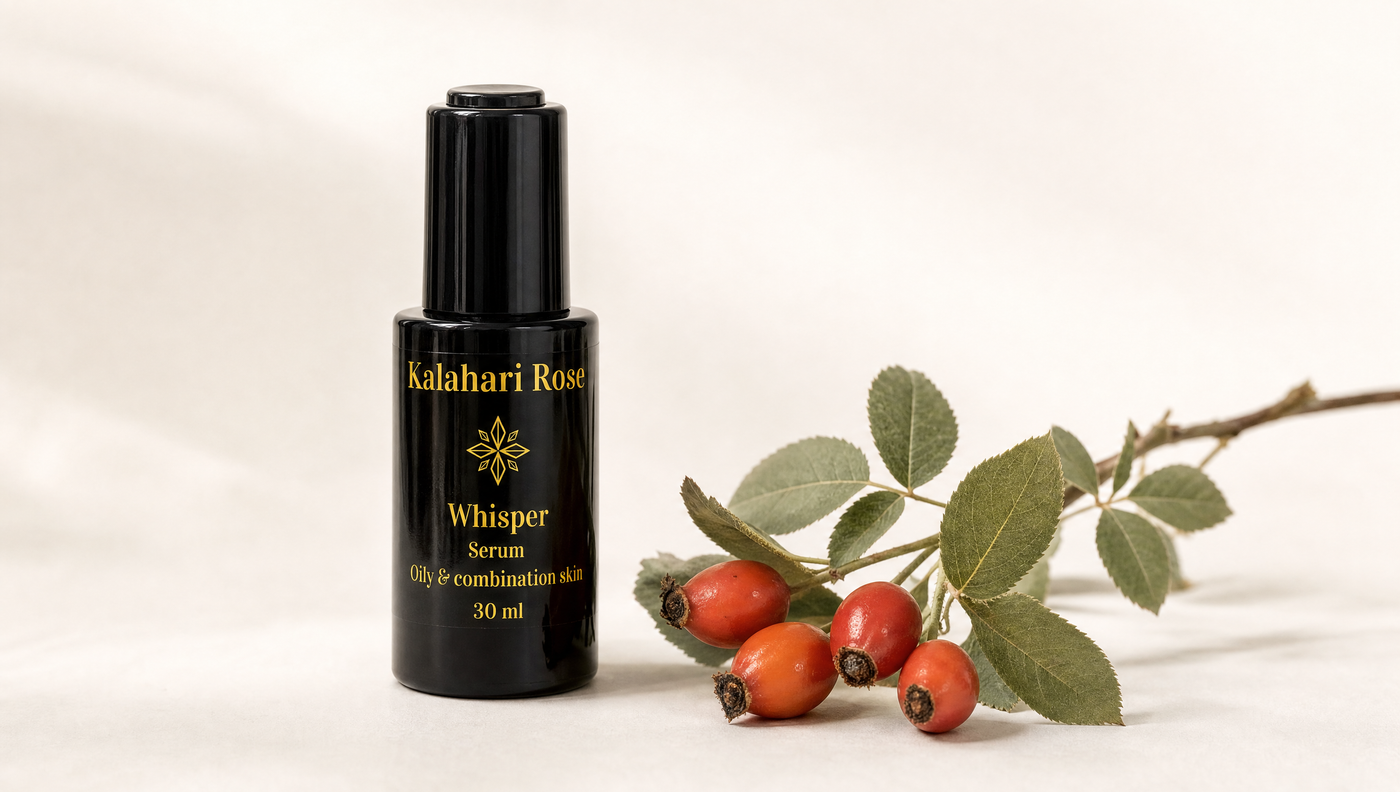
Rosehip seed oil is one of more than a hundred botanicals blended into Whisper Face Serum, our lightweight organic serum for oily and combination skin. It is fragrance-free and pairs with cold-pressed oils like Kalahari melon seed, marula, argan, and prickly pear, so no single ingredient carries the whole formula. That is the honest answer to "is rosehip the miracle": it is not. It is one well-chosen part of a routine that respects the barrier.
References
- Concha J, Soto C, Chamy R, Zuniga ME. Effect of rosehip extraction process on oil and defatted meal physicochemical properties. Journal of the American Oil Chemists' Society, 2006, 83(9): 771-775.
- Elias PM. Stratum corneum defensive functions: an integrated view. Journal of Investigative Dermatology, 2005, 125(2): 183-200.
- Ilyasoglu H. Characterization of rosehip (Rosa canina L.) seed and seed oil. International Journal of Food Properties, 2014, 17(7): 1591-1598.
Frequently asked
What does rosehip seed oil do for your skin?
It is a lightweight facial oil high in linoleic acid, which the skin uses to build a healthy barrier. It also carries natural carotenoids (plant provitamin A) that give it a warm color and antioxidant activity. Together these may help skin look smoother over time, without the irritation stronger retinoids can cause.
Is rosehip oil good for oily and combination skin?
Yes. Oils high in linoleic acid tend to feel dry and are generally well tolerated by oily and combination skin. Rosehip is one of the driest-feeling facial oils there is.
Does rosehip oil contain retinol?
No, but it does contain carotenoids the body can convert to vitamin A. That is why it is often described as a gentle, plant-based way into vitamin A skincare without prescription-strength irritation.
When should I apply rosehip seed oil in my routine?
After cleansing and any water-based products, and before your moisturizer at night. A few drops pressed into slightly damp skin is enough. In the morning it can go under sunscreen.
How long until I see results from rosehip oil?
Skin cell turnover takes about four to six weeks, so give any new oil at least one full cycle of consistent nightly use before judging. Hydration and softness usually show first; tone and texture take longer.
Lightweight oil, real barrier support.
Shop Whisper Face Serum
