

What Marula Oil Does for Your Skin
Kalahari Rose Journal · 5 min read
Marula oil is a light, fast-absorbing facial oil pressed from the kernels of the marula tree. It is rich in oleic acid and natural antioxidants, sinks in without a greasy film, and resists going rancid, which is why it has quietly become a staple in botanical skincare. Here is what it is, what it does for skin, how to use it, and how it compares to the oils people usually weigh it against.
What marula oil is
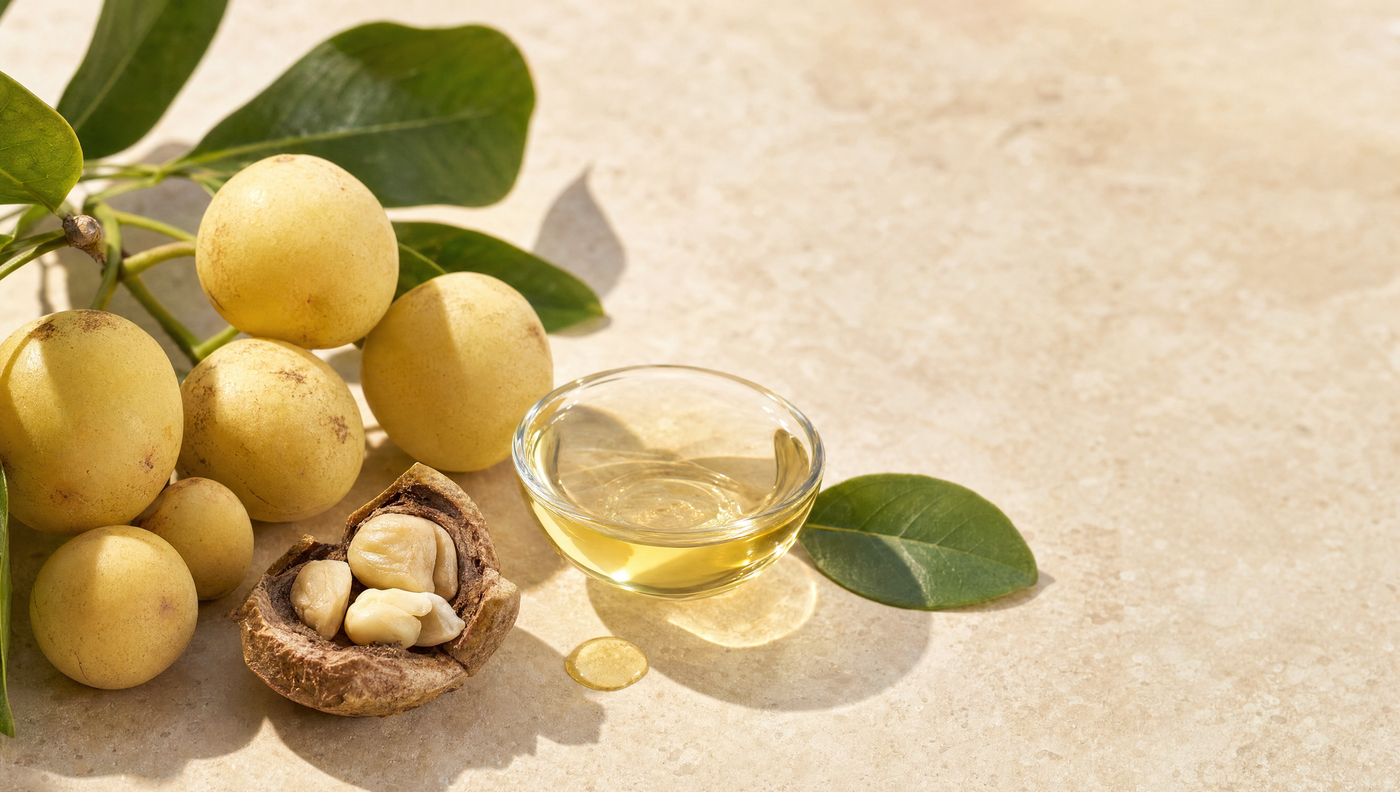
Marula oil comes from the kernels inside the fruit of the marula tree, Sclerocarya birrea, which grows across Southern Africa. Its defining feature is its makeup. It is predominantly oleic acid, a monounsaturated fatty acid, and it carries natural antioxidants including vitamin E (Mariod and Abdelwahab, Food Reviews International, 2012). The fruit has been gathered and pressed by hand in the region for generations, and today the oil is a valued export, often produced through rural cooperatives.
What marula oil does for skin
In short, it softens skin and helps it hold moisture without weighing it down. Oleic acid is an emollient, so it smooths the surface of the skin and supports its moisture. Because marula is rich in it and lower in the heavier fatty acids, it absorbs quickly and feels dry to the touch rather than greasy. The antioxidants it carries may help defend skin against everyday environmental stress. It is not a miracle ingredient. It is a well-balanced plant oil that works with the skin rather than against it.
Why marula oil stays stable
Natural oils can oxidize and turn rancid, which is bad for skin and for a formula's shelf life. Marula is known for its oxidative stability: its high oleic-acid content and natural antioxidants help it resist that breakdown. In a clean, botanical formula, an inherently stable oil is a real advantage, and it is one reason marula appears so often in considered skincare rather than as a passing trend.
How to use marula oil
Apply a few drops of marula oil to clean, slightly damp skin. Warm them between your fingertips and press, rather than rub, into your face and neck. Use it on its own, or as the last step of your routine to seal in a water-based serum or moisturizer. It suits both morning and night, and its light finish means it sits comfortably under other products. Marula also layers well over a freshly cleansed face; if you cleanse with an oil, see our guide to oil cleansing. If it is your first time, patch test on your inner arm first.
Is marula oil comedogenic?
For most people, no. Marula is generally considered low on the comedogenic scale, which means it is unlikely to clog pores, and its fast absorption suits oily and combination skin as well as dry skin. As with any oil, individual reactions vary, so patch test before you use it regularly.
Marula oil vs argan and rosehip oil
All three are excellent plant oils, and they do slightly different jobs. Marula is higher in oleic acid and unusually stable, so it feels light, nourishing, and lasts well. Rosehip is richer in polyunsaturated fatty acids, which many people like for tone and texture, but it oxidizes faster. Argan sits between the two. There is no single winner, and good formulas often combine them so each covers what the others do not. If you are choosing between formats, our guide to face oil vs face serum helps, and we compare two botanical oils directly in Kalahari Melon Seed Oil vs Rosehip Oil.
The best plant oils do their work quietly. Marula is one of them.
Who marula oil suits
Marula is gentle enough for most skin, including dry and sensitive skin, and its light finish means oily and combination skin usually tolerate it well too. Because it brings its benefits without needing added fragrance, it fits naturally into a fragrance-free routine, which is the kinder choice for skin that reacts easily.
Where marula fits in your routine
You do not need a single-ingredient marula oil to feel the benefit. Our Hydrate Face Cream includes marula alongside more than one hundred globally sourced botanicals, so it arrives balanced with other nourishing oils rather than working on its own. Marula is part of why the cream feels rich but never heavy. For dry and sensitive skin that wants comfort without grease, it is a quiet workhorse.
Frequently asked
Is marula oil good for the face?
Yes. It is a light, fast-absorbing oil rich in oleic acid, so it softens skin and helps it hold moisture without feeling greasy. Patch test any new oil first.
Is marula oil comedogenic or will it clog pores?
For most people, no. Marula is generally considered low on the comedogenic scale and absorbs quickly, so it is unlikely to clog pores. Individual reactions vary, so patch test first.
Is marula oil greasy or heavy?
No. Marula is one of the lighter facial oils. It absorbs quickly and tends to leave a dry, non-greasy finish, which is why oily and combination skin often tolerate it well.
How is marula oil different from argan or rosehip oil?
Marula is higher in oleic acid and very stable, so it feels light and lasts well. Rosehip is richer in polyunsaturated fats and oxidizes faster. Argan sits between them. Many formulas use them together.
Does marula oil suit sensitive skin?
Generally, yes. It is gentle and works well in fragrance-free formulas, which are the better choice for reactive skin. As always, patch test before regular use.
What is marula oil made from?
It is pressed from the kernels of the marula tree (Sclerocarya birrea), which grows across Southern Africa. It is naturally rich in oleic acid and antioxidants like vitamin E.

