

How Antioxidants Work in Skincare (And Why Not All Are Equal)
Antioxidants are one of the most universally recommended categories in skincare - and for good reason. But the word gets used so broadly that it can lose meaning. What do antioxidants actually do? And why do some outperform others?
The Free Radical Problem
Free radicals are unstable molecules with an unpaired electron. They're generated constantly in skin by UV radiation, pollution, infrared light, cigarette smoke, and even the skin's own metabolic processes. To stabilize themselves, free radicals "steal" an electron from a neighboring molecule - which then becomes a free radical itself, setting off a damaging chain reaction. The cumulative result: collagen breakdown, DNA damage, inflammation, and accelerated aging.
How Antioxidants Intervene
Antioxidants donate electrons to free radicals without becoming unstable themselves, breaking the chain reaction before it can cause significant damage. Different antioxidants specialize in neutralizing different types of free radicals, which is why skincare scientists recommend using multiple antioxidants in combination rather than relying on a single compound.
Primary vs. Secondary Antioxidants
Primary antioxidants directly neutralize free radicals. Examples include vitamin E (tocopherols), vitamin C (ascorbic acid), and the flavonoids found in rooibos. Secondary antioxidants regenerate primary antioxidants after they've been oxidized. Vitamin C, for example, regenerates vitamin E - which is why they're frequently formulated together.
What Makes Rooibos Antioxidants Special?
Most botanical antioxidants - quercetin, kaempferol, resveratrol - are found across many plant families. Rooibos contains aspalathin and nothofagin, dihydrochalcone antioxidants found nowhere else in the plant kingdom. This unique profile provides antioxidant coverage that truly complements (rather than duplicates) vitamins C and E.
Antioxidant Stability in Skincare
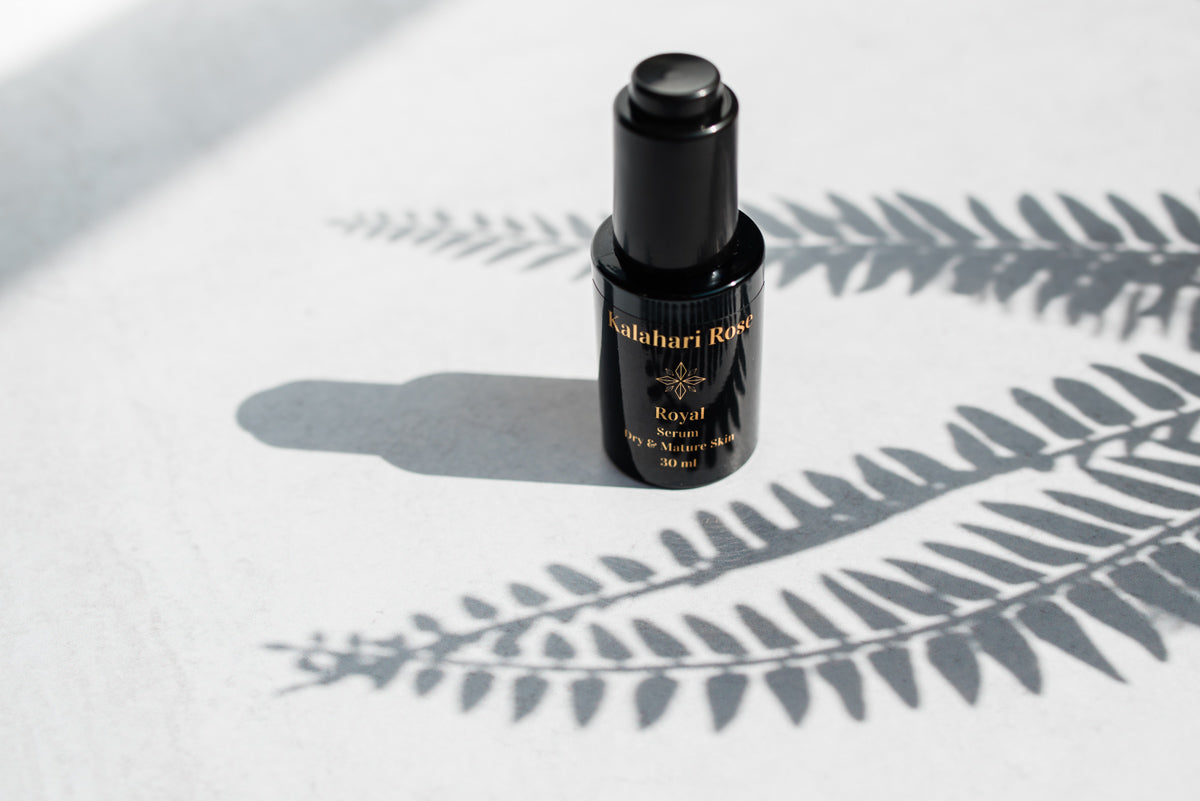
An antioxidant that oxidizes before it reaches your skin provides no benefit. Stability matters enormously. Vitamin C is notoriously unstable in water-based formulations and must be stabilized through pH, packaging, and derivative chemistry. Plant oils naturally protect their antioxidant content in a lipid medium that is far more stable. This is one reason why antioxidant-rich oils like Kalahari melon seed oil - packaged in dark, airless containers - can deliver meaningful antioxidant benefits to skin.
Explore our antioxidant-rich serums and face oils formulated with African botanical antioxidants.

